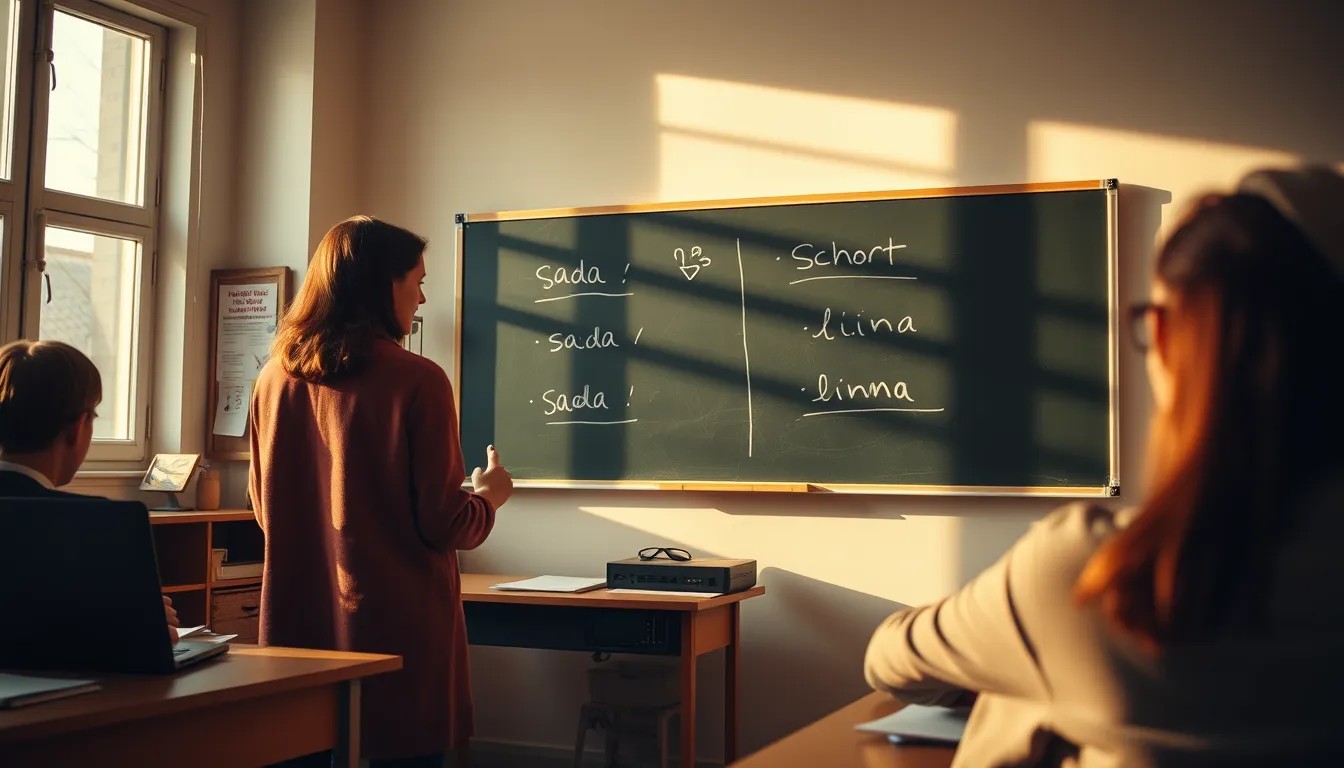
Vowel and consonant length is the heart of Estonian pronunciation — and the thing learners most often miss. Estonian famously has a rare three-way length system, but even just hearing short vs long will transform how well you're understood. Locals notice instantly when someone gets length right.
By the end you'll hear Estonian's most important sound feature: length. A single letter is short, a double letter is long — and that difference changes the word (sada = 100, saada = send!).
Anna discovers that holding a sound longer can change the whole word. Listen for the pairs.
Tap any word for its meaning. Tap a word's Kuula lauset to hear that sentence in the chosen voice.
Täna õpib Anna pikki ja lühikesi häälikuid. „Pikkus muudab tähendust,“ ütleb õpetaja. „Kuula: sada ja saada.“ „Sada on number 100, saada on käsk „saada!“.“
„Üks a on lühike, kaks a-d on pikk,“ seletab õpetaja. „Sama kaashäälikutega: lina ja linna.“ „Lina on voodilina, linna tähendab „linna sisse“.“ Anna kuulab hoolega vahet.
„Topelttäht tähendab pikka häälikut,“ ütleb õpetaja. „Kool, raamat, kohv — kuula pikki häälikuid.“ Anna kordab aeglaselt: „saada, linna.“ „Suurepärane! Sa kuuled pikkust juba hästi,“ naeratab õpetaja.
Today Anna learns long and short sounds. “Length changes meaning,” says the teacher. “Listen: sada and saada.” “Sada is the number 100, saada is the command ‘send!'”
“One a is short, two a's are long,” explains the teacher. “Same with consonants: lina and linna.” “Lina is a bedsheet, linna means ‘into the city'.” Anna listens carefully for the difference.
“A double letter means a long sound,” says the teacher. “Kool, raamat, kohv — listen for the long sounds.” Anna repeats slowly: “saada, linna.” “Excellent! You're hearing length well already,” the teacher smiles.
Key words from the story. Tap the speaker to hear each one.
| Estonian | Say it like | English |
|---|---|---|
| pikk | pikk | long |
| lühike | LUE-hi-ke | short |
| pikkus | PIK-kus | length |
| tähendus | TAE-hen-dus | meaning |
| muutma | MUUT-ma | to change |
| topelttäht | TO-pelt-taeht | double letter |
| vahe | VA-he | difference |
| sada | SA-da | hundred |
| saada | SAA-da | send! (from saatma) |
| lina | LI-na | sheet, linen |
| linn | linn | city (linna = of/into the city) |
| kool | kool | school |
| raamat | RAA-mat | book |
One idea to hold on to — the rest of the lesson builds on it.
In writing it's simple: one letter = short, two letters = long. This works for both vowels and consonants:
sada (100) → saada (send!) — long vowel.
lina (sheet) → linna (of the city) — long consonant.
So hold a doubled letter noticeably longer — it's a different word.
This is the one feature that most changes meaning in Estonian. The good news: for now, just follow the spelling — double letter, longer sound.
| Short | Long | What changed |
|---|---|---|
| sada — 100 | saada — send! | long vowel aa |
| lina — sheet | linna — of the city | long consonant nn |
| kala — fish | kalla — pour! | long consonant ll |
| tule — come! | tulle — into the fire | long consonant ll |
Two things to know:
- 1Double letter = hold it longer. Don't rush a kool (school) into a kol.
- 2Estonian actually has three lengths (short, long, over-long) — but the third isn't shown in spelling and can wait. For now, short vs long is plenty.
Two short exchanges. Tap the speaker on any line and say it back.
Recognise it: tap the option that fits.
Type the missing word, then check.
Say a minimal pair out loud, exaggerating the long sound, then write both words. Feel how the length alone changes the meaning.
Try: sada (short) → saada (long aa). Hold the long one clearly.
Exaggerate at first: a long aa or nn held clearly beats one that's too short. In Estonian, length is meaning.
- hear short vs long vowels and consonants
- follow the spelling: double letter = hold it longer
- know length can change the whole word
Quick check
These come back tomorrow, in 3 days and in a week — in your flashcards and review email.