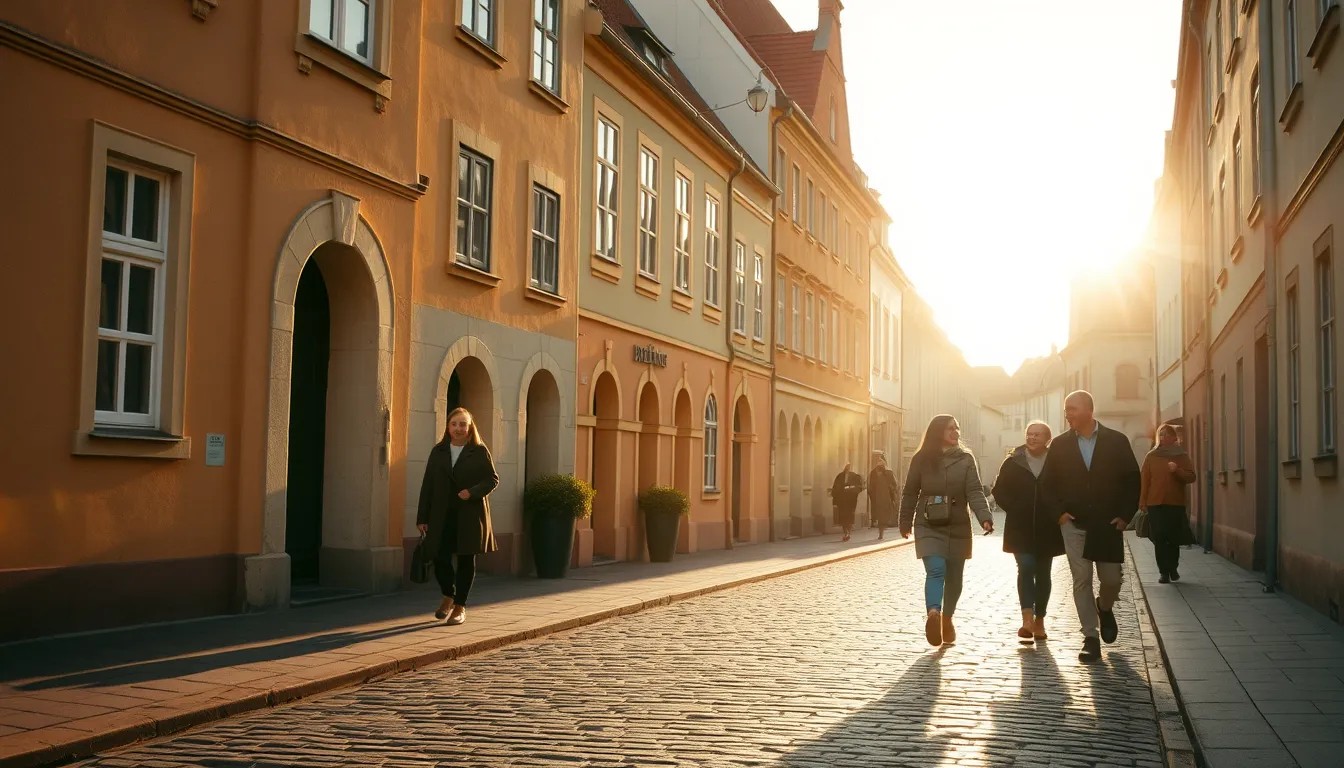
Estonians can seem reserved at first, but a warm Tere opens every door — the shop, the bus, the sauna. People greet strangers in lifts and on forest paths. You don't need to be fluent: simply greeting someone in Estonian, at the right time of day, is noticed and quietly appreciated everywhere.
By the end of this lesson you can greet anyone in Estonian — at the right time of day — and say goodbye. Just a handful of words, but they're the ones you'll use every single day in Estonia.
Listen and read. It's almost all greetings — see how they change with the clock.
Tap any word for its meaning. Tap a word's Kuula lauset to hear that sentence in the chosen voice.
Hommik. Kell on kaheksa. Anna läheb tööle. Ta näeb naabrit ja ütleb: „Tere hommikust!“ Naaber vastab: „Tere hommikust, Anna!“
Päeval on Anna kohvikus. „Tere!“ ütleb ettekandja. „Tere! Üks kohv, palun,“ vastab Anna.
Õhtul tuleb Anna koju. „Tere õhtust!“ ütleb ta. Ema naeratab: „Tere, kallis!“
Kell on üksteist. Anna on väsinud. „Head ööd!“ ütleb Anna. „Head ööd! Maga hästi,“ vastab ema.
Morning. It's eight o'clock. Anna goes to work. She sees her neighbour and says: “Good morning!” The neighbour answers: “Good morning, Anna!”
During the day Anna is in a café. “Hello!” says the waiter. “Hello! One coffee, please,” answers Anna.
In the evening Anna comes home. “Good evening!” she says. Mum smiles: “Hello, dear!”
It's eleven o'clock. Anna is tired. “Good night!” says Anna. “Good night! Sleep well,” answers Mum.
Key words from the story. Tap the speaker to hear each one.
| Estonian | Say it like | English |
|---|---|---|
| tere | TEH-reh | hello (any time) |
| tere hommikust | TEH-reh HOM-mi-koost | good morning |
| tere päevast | TEH-reh PAE-vast | good day / afternoon |
| tere õhtust | TEH-reh UHH-toost | good evening |
| head aega | HEAD AE-ga | goodbye |
| nägemist | NAE-geh-mist | see you, bye |
| head ööd | HEAD UHHD | good night |
| aitäh | AI-tah | thank you |
| palun | PAH-lun | please / you're welcome |
| naaber | NAA-ber | neighbour |
| ema | EH-ma | mum |
| ütlema | UET-leh-ma | to say (ütleb = says) |
One idea to hold on to — the rest of the lesson builds on it.
But plain Tere! is always correct — with anyone, at any time. When in doubt, say Tere.
Four greetings, one simple logic — match the greeting to the clock. There's nothing to change for “formal” or “informal”: Estonian greetings are the same for everyone.
| When | You say | Word inside |
|---|---|---|
| Morning | Tere hommikust! | hommik = morning |
| Midday / afternoon | Tere päevast! | päev = day |
| Evening | Tere õhtust! | õhtu = evening |
| Any time at all | Tere! | — just “hello” |
Leaving, and night-time:
- 1Head aega! — Goodbye (literally “good time”).
- 2Nägemist! — See you — a friendly, casual bye.
- 3Head ööd! — Good night — only when someone is going to sleep.
Two short exchanges. Tap the speaker on any line and say it back.
Recognise it: tap the option that fits.
Type the missing word, then check.
It's morning. You meet your neighbour on the stairs. Write (or say aloud) a short 4-line greeting: say good morning, let them greet you back, then say goodbye.
Open with Tere hommikust! and close with Head aega! or Nägemist! — that's a complete, natural Estonian exchange.
Short and warm is exactly right. Estonians don't expect a long exchange — a clear Tere hommikust and a friendly Nägemist is perfect.
- greet anyone at the right time of day
- say goodbye: Head aega, Nägemist, Head ööd
- say aitäh (thank you) and palun (please / you're welcome)
Quick check
These come back tomorrow, in 3 days and in a week — in your flashcards and review email.